
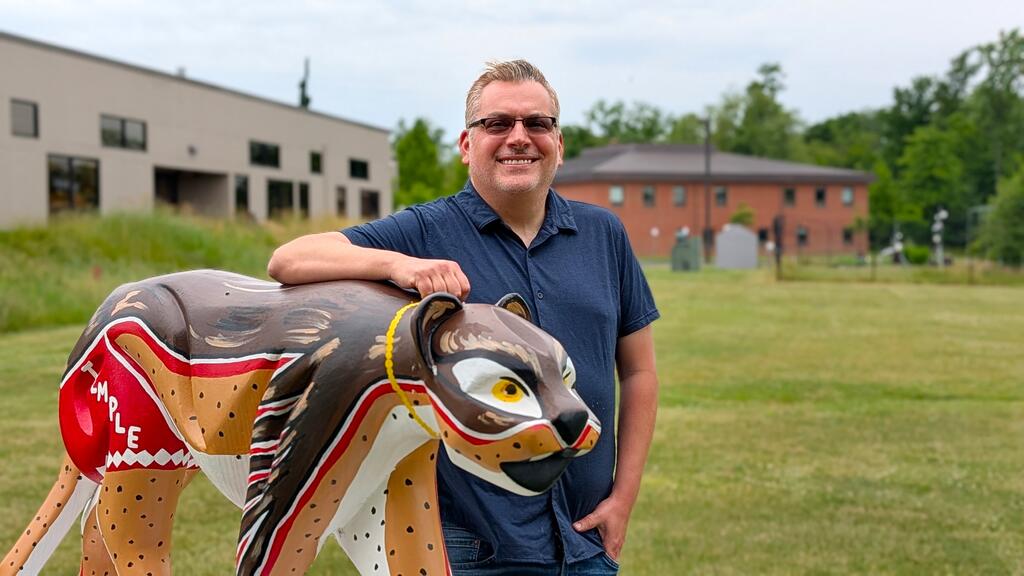
Michael Bavas, Senior Technical Support Specialist at Temple Ambler unquestionably has an inquisitive mind. An avid reader and global traveler, Bavas is a technology expert constantly striving to increase his knowledge in the field and beyond as he works on completing an MBA degree at the Stevens Institute of Technology.
Bavas can now add a few more appellations to that list — researcher and conservationist.
“I recently began consulting with the Pró-Onça Institute as a conservation data and spatial analysis specialist, supporting their mission to protect jaguars and their habitats across Brazil’s critical ecosystems, including the Pantanal wetland region,” he said. “Jaguars play a vital role as apex predators, helping maintain ecological balance and biodiversity.”
In this role, Bavas said, he assists with organizing and analyzing conservation data, contributing to spatial mapping efforts and “translating field research into meaningful insights using GIS, data analytics and statistical tools.”
“This work supports ongoing efforts to monitor jaguar populations, understand habitat use and inform conservation strategies,” he said. “It’s exciting to be contributing to this important work by leveraging my background in IT and my ongoing MBA studies in data analytics and AI-driven business intelligence to help bridge the gap between field research and data-informed decision-making in conservation.”
According to Bavas, he originally connected with the Pró-Onça Institute “as I was looking for ways to channel some new experiences using data analytics.”
“Pró-Onça, which is based on Brazil, needed data analysis support team to help them with jaguar research in several native biomes across Brazil,” he said. “It’s an all-volunteer position and I’m grateful to be able to do this outside of my IT work for Temple. I have a passion for environmental conservation, especially as it relates to wildlife species, as well as traveling and learning about new places — this research combined all of the things that I’m interested in.”
An avid global traveler, Bavas said his adventures have taken him and his wife Janet to Asia and South American in recent years.
“As you travel you open yourself to new experiences and you see all of the environmental challenges that each area has — these are critical issues that are being faced around the world in different climates and biomes,” he said. “I am not a scientist and Pró-Onça is doing important scientific work, but I can help them analyze their data.”
Pró-Onça is not just relying on trail cam data, where they are capturing real-life photography of native species, Bavas said. They're also relying on data collected through Esri (Environmental Systems Research Institute) geographic information systems “which is something that Temple is pretty active in supporting.”
“There are scientists all over the world that are contributing their data. I'm taking all of that data from different sources and updating their models and feeding it into machine algorithms, so they can have the latest information on various habitats to see which areas are getting deforested,” he said. “What’s actually been uncovered is that as jaguars are losing habitat to deforestation, they have migrated to other areas — they’re actually discovering migration patterns.”

The Pró-Onça Institute team in Brazil.
Supporting Evidence-based Conservation
According to Leticia Benavalli, Conservation Biologist and CEO and Founder of the Pró-Onça Institute, Bavas has played a critical role “in strengthening the analytical side of the project.”
“He's the one going through our data, running the spatial analyses and building the predictive models with us. His expertise has helped us turn a huge amount of raw field data into something we can actually use; robust models and analyses that hold up scientifically,” she said. “Thanks to his support, we are able to ask bigger ecological questions. Mike is connecting our field observations to an analytical and scientific foundation. Our team collects the ecological data out in the field and then Mike helps translate those observations into models that reveal habitat suitability, connectivity and conservation priorities — that's what allows us to make evidence-based conservation decisions.”
Pró-Onça’s current study focuses on understanding how jaguars are surviving in one of the most threatened regions of the Brazilian Cerrado, “an area that's becoming hotter and drier every year,” Benavalli said.
“What made this region especially urgent to me is that no systematic research had ever been done here to answer basic questions: how many jaguars are there, where exactly are they, what are they eating and what threats are they facing,” she said. “Using camera traps, spatial modeling, landscape analysis and ecological data, we're building that baseline for the first time, identifying where jaguars still persist and which habitats are most important for their long-term survival.”
The goal, according to Benavalli, is to also map out priority areas for jaguar conservation in this specific region and, “in the long term, understand how we can connect them to the Atlantic Forest through ecological corridors.”
“All of this is meant to generate real scientific evidence to support conservation decisions and help local communities coexist with large carnivores. Over time, this work naturally grew into other species as well,” she said. “We're now also studying the maned wolf, looking at its community dynamics and interactions with domestic dogs in Parque Estadual dos Pireneus and in Brasília, for example.”
Modern conservation generates a huge amount of data, but data by itself doesn't protect wildlife,” Benavalli said.
“Someone has to turn it into something usable and that's where Mike's expertise makes a difference for us. He helps us integrate occurrence records, environmental variables, GIS and statistical modeling into a much clearer picture of how jaguars actually move through and interact with the landscape,” she said. “In practice, this means technology takes us beyond just documenting where jaguars are. It helps us predict where conservation actions will actually make a difference, so we can focus our limited resources where they matter most.”
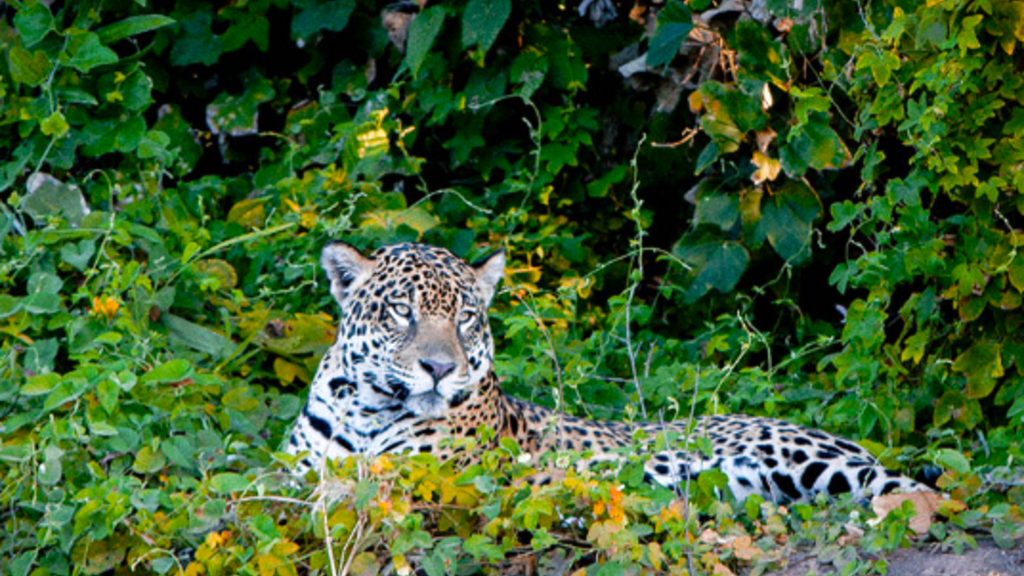
Pró-Onça’s current study focuses on understanding how jaguars are surviving in one of the most threatened regions of the Brazilian Cerrado.
Understanding the Long-term Viability of Jaguar Populations
The next phase of the research, according to Benavalli, is to integrate population parameters with habitat suitability models to better understand the long-term viability of jaguar populations across Pró-Onça’s study areas.
“We're also refining our connectivity analyses to understand the genetic gaps between populations and identify which areas are most important for conservation and restoration. We already work closely with local communities, and the next step is to expand this even further, strengthening community-based conservation actions,” she said. “For us, conservation only really works long-term when it's built together with the people who live alongside the wildlife and seeing that connection grow is what keeps me motivated to keep doing this work.”
What is equally inspiring about Pró-Onça’s work, according to Bavas, is their “commitment to advancing women in science, led by a team of female biologists.”
“The organization actively promotes female leadership in conservation by supporting women researchers and expanding opportunities in STEM fields,” he said.
According to Benavalli supporting women in science is one of the core missions of Pró-Onça.
“I noticed how few young women were in leadership positions, especially in the field of large carnivore conservation in Brazil. I wanted to change that, to build an organization where women could lead this kind of work, not just take part in it,” she said. “We recognize the value of women who are so often left out of scientific spaces, especially rural women, quilombola women, indigenous women and young women just starting out. These are groups that historically have had very few doors open to them in conservation science, even though they often hold deep knowledge of the land and the wildlife around them.”
Pró-Onça’s programs are “open to all women who want to be part of this work, regardless of background,” Benavalli said.
“Through Pró-Onça, we create real opportunities for women to get hands-on experience in wildlife monitoring, ecological restoration and field research, and whenever we can, we make sure these are paid positions, not just volunteer work, because valuing women's work also means paying for it,” she said. “We believe conservation gets stronger when more women are leading research, making decisions and shaping what happens in their own communities and territories.”
Benavalli said her hope for their current research is that it “gives us the clearest picture we've ever had of jaguar distribution in Brazil, especially here in the Cerrado.”
“Updating these occurrence records matters to me because it shows what's really happening on the ground today, not just what we assumed was happening. When we combine that with habitat suitability and population models, we can actually start anticipating what's coming for this species, instead of just reacting,” she said. “More than anything, I hope this becomes a foundation that outlives the study itself, something people can keep using to guide conservation planning, identify priority areas for protection and restoration and make sure jaguars stay connected across the landscape for generations to come.”
According to Bavas, his ongoing work with Pró-Onça is already opening up potential new avenues for him to support global conservation efforts.
“I am also involved in a climate change and sustainable urban redevelopment research initiative with Kali Polis in Athens, Greece, where I am helping guide a cohort of students from the American College of Greece exploring innovative approaches to urban resilience, environmental sustainability and climate adaptation,” he said. “This is a way of reaching out and trying to make a difference where I can. Next year I plan to visit Pró-Onça in Brazil. I’m going to learn how to track jaguars!”